
팥죽은 단순히 한 끼의 식사를 넘어, 한국인의 삶 속에 깊이 뿌리내린 전통의 가치와 따뜻한 마음이 담긴 음식입니다. 예로부터 동지(冬至)에는 팥의 붉은 기운이 나쁜 기운을 물리치고 가족의 건강과 안녕을 지켜준다고 믿어왔습니다. 오랜 시간 팥을 삶고 정성스레 앙금을 내려 만드는 팥죽은 만드는 이의 인내와 사랑이 듬뿍 담긴 정성 가득한 보양식입니다. 이 레시피를 통해 정통의 맛을 재현하고, 소중한 사람들과 함께 나눌 수 있는 따뜻한 팥죽의 깊은 풍미를 경험해 보시기 바랍니다.
Patjuk is more than just a meal; it is a dish deeply rooted in Korean culture, carrying traditional values and warmth. Traditionally, on the winter solstice (Dongji), it was believed that the red energy of the beans would ward off misfortune and protect the health and peace of the family. Making Patjuk—a process requiring patience, from boiling the beans to straining the sediment—is an act of love and devotion. Through this guide, we hope you can recreate the authentic taste and experience the deep, heartwarming flavors of traditional Patjuk to share with your loved ones.
1. 재료 준비 (Ingredients)
| 팥 (Red Beans) | 300g |
| 멥쌀 (Non-glutinous rice, soaked) | 1/2 컵 (cup) |
| 찹쌀가루 (Glutinous rice flour) | 200g (옹심이용 / for ongsimi) |
| 소금 (Salt) | 적당량 (to taste) |
| 물 (Water) | 넉넉히 (as needed) |
2. 조리 단계 (Steps)
단계 1: 팥 준비하기 (Preparing the Red Beans)
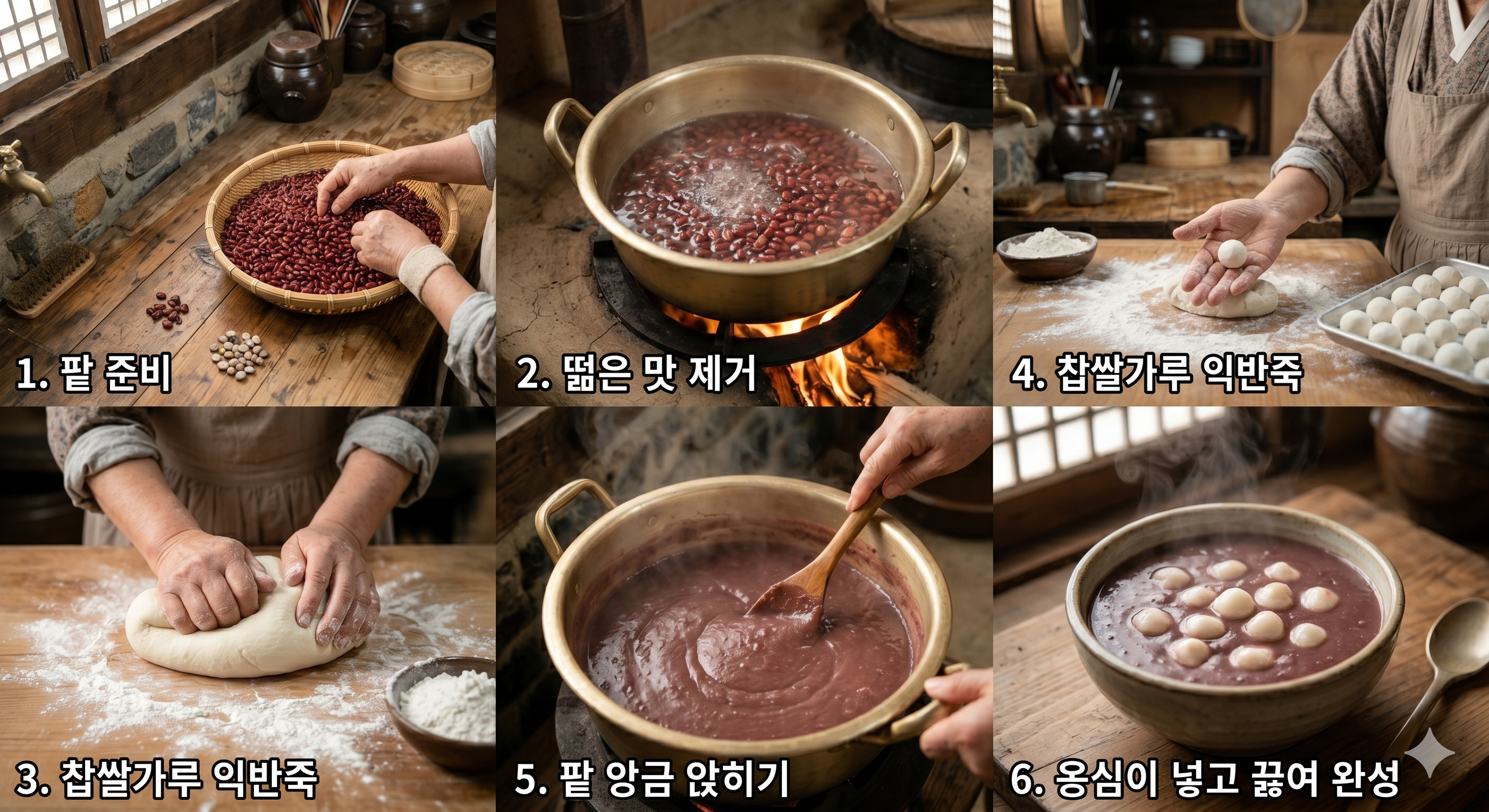
팥은 깨끗이 씻어 불순물을 제거합니다. 팥의 떫은 맛을 없애기 위해 첫 물은 끓어오르면 바로 버려주세요. Wash the red beans thoroughly to remove any impurities. To remove the astringent taste, boil the beans in the first batch of water and discard the water once it starts to boil.
단계 2: 팥 삶기 (Boiling the Beans)
새 물을 붓고 팥이 뭉그러질 정도로 푹 삶습니다. 삶아진 팥은 체에 걸러 껍질을 분리하고 앙금을 앉힙니다. Add fresh water and boil the beans until they are very soft and can be easily mashed. Strain the beans through a sieve to remove the skins and let the bean sediment (the thick paste) settle.
단계 3: 옹심이 만들기 (Making Ongsimi)
찹쌀가루에 뜨거운 물을 조금씩 부어가며 반죽합니다. 반죽을 한입 크기의 동그란 모양으로 빚어줍니다. Gradually add hot water to the glutinous rice flour and knead it into a dough. Shape the dough into small, bite-sized balls.
단계 4: 끓이기 (Cooking the Porridge)
냄비에 팥 앙금과 불린 쌀을 넣고 쌀알이 완전히 퍼질 때까지 저어가며 끓입니다. 마지막에 옹심이를 넣고 옹심이가 떠오르면 완성입니다. In a pot, combine the bean sediment and the soaked rice. Stir constantly while cooking until the rice grains are fully cooked and soft. Finally, add the ongsimi and cook until they float to the surface, signaling that they are cooked.
3. 전문가의 팁 및 영양 정보 (Expert Tips & Nutrition)
- 영양소 (Nutrition): 팥은 비타민 B1이 풍부하여 피로 회복에 탁월한 효과가 있습니다. (Red beans are rich in Vitamin B1, excellent for fatigue recovery.)
- 맛 조절 (Flavor): 취향에 따라 설탕을 넣으면 달콤한 팥죽으로, 소금으로 간을 하면 담백한 전통 팥죽으로 즐길 수 있습니다. (Add sugar for sweet porridge, or salt for traditional savory flavor.)
- 보관 방법 (Storage): 남은 팥죽은 완전히 식힌 후 소분하여 냉동 보관하고, 드실 때 데워 드시면 좋습니다. (Cool completely, portion, and freeze; reheat when ready to serve.)
- 더 깊은 맛을 내는 법 (Enhanced Flavor): 팥물을 걸러낼 때 체를 이용해 껍질을 완전히 제거하면 식감이 더욱 부드러워집니다. (For a smoother texture, strain the bean water thoroughly to remove all skins.)

https://andamiro1004.tistory.com/92
정갈하고 맛있는 애호박전 만들기: 실패 없는 황금 레시피 Making Delicious Pan-fried Zucchini: A Foolproof R
요리 소개애호박전은 한국의 대표적인 가정식 반찬 중 하나입니다. 애호박의 은은한 단맛과 고소한 계란물의 조합은 남녀노소 누구나 좋아하는 맛입니다. 특히 비 오는 날 막걸리 안주로, 혹은
andamiro1004.tistory.com


