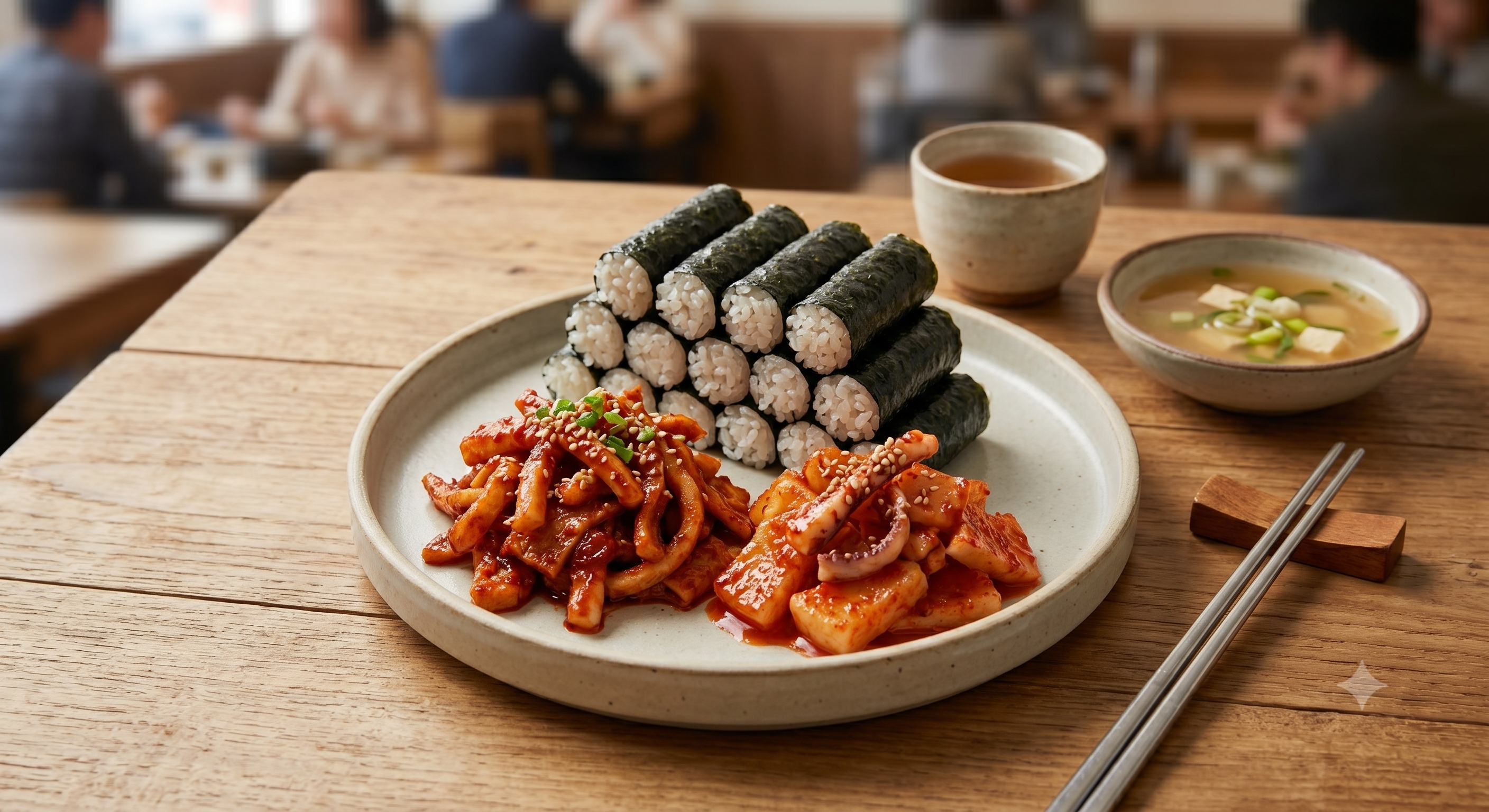
한국을 방문하는 외국인들이 일반 김밥을 먹고 나면 꼭 한 번쯤 고개를 갸웃거리며 묻는 음식이 있습니다. 바로 충무김밥(Chungmu Gimbap)입니다. 속재료를 가득 채워 말아내는 보통의 김밥과 달리, 밥 속을 완전히 비워둔 채 김에 흰밥만 말아 매콤달콤하게 무친 오징어 어묵 무침, 그리고 아삭한 섞박지 무김치를 곁들여 먹는 아주 독특하고 매력적인 스타일이죠.
When foreigners visit Korea, they often get curious about a unique variation of Gimbap. Unlike the standard Gimbap packed with various colorful fillings, Chungmu Gimbap features minimalist mini rice rolls served alongside a side of spicy, sweet squid and fish cake salad, and crunchy radish kimchi.
이 독특한 음식은 과거 통영(옛 지명 '충무')의 따뜻한 바다로 일하러 나가는 어부들을 위해 만들어졌습니다. 더운 날씨에 음식이 쉽게 상하지 않도록 밥과 반찬을 분리해서 싸 가던 지혜가 오늘날 한국을 대표하는 별미로 자리 잡은 것입니다. 오늘은 요리 초보자부터 외국인 친구들까지 누구나 집에서 실패 없이 완벽한 맛을 낼 수 있는 정통 충무김밥 레시피를 상세한 설명과 함께 소개합니다.
This dish originated from the coastal city of Tongyeong (formerly known as Chungmu). Fishermen who worked out at sea for long hours needed a meal that wouldn't spoil quickly in the humid weather. The clever solution was to separate the unseasoned rice from the highly seasoned sides. Today, we'll dive into an easy-to-follow recipe perfect for anyone wanting to recreate this authentic Korean harbor classic at home.
1. 충무김밥 재료 안내 (Ingredients & Substitutes)
충무김밥의 핵심은 ‘단순함의 미학’입니다. 재료는 소박하지만, 각각의 밑간과 양념이 어우러져 폭발적인 감칠맛을 냅니다. 해외에서도 현지 식재료로 쉽게 따라 하실 수 있도록 대체 재료를 완벽히 정리해 두었습니다. The core of Chungmu Gimbap is the "aesthetics of simplicity." Although the ingredients are simple, the combinations of seasoning create an explosive savory flavor. We have fully listed alternative ingredients so you can easily follow along even overseas using local products.
| 밥 & 김 (Rice & Seaweed) | 흰쌀 (White Rice) | 2공기 (400g) | Short-grain rice recommended (Avoid Jasmine rice) |
| 구운 김 (Roasted Seaweed Sheets) | 3~4장 | Sushi Nori sheets | |
| 참기름 (Sesame Oil) | 1큰술 (1 tbsp) | Toasted sesame oil | |
| 소금 (Salt) | 1/2작은술 (0.5 tsp) | Fine sea salt | |
| 오징어 무침 (Squid & Fish Cake) | 오징어 (Squid) | 1마리 (Medium) | Calamari rings, cuttlefish, or frozen squid |
| 어묵 (Fish Cakes) | 2장 (100g) | Fried fish cakes (Available at Asian markets) | |
| 고춧가루 (Chili Powder) | 3큰술 (3 tbsp) | Gochugaru (Korean chili flakes) | |
| 간장 (Soy Sauce) | 1.5큰술 (1.5 tbsp) | Tamari or Regular Soy sauce | |
| 멸치액젓 (Fish Sauce) | 1큰술 (1 tbsp) | Thai or Vietnamese fish sauce | |
| 올리고당 (Corn Syrup) | 2큰술 (2 tbsp) | Honey, rice syrup, or maple syrup | |
| 다진 마늘 (Minced Garlic) | 1큰술 (1 tbsp) | Garlic paste | |
| 섞박지 무 (Radish Kimchi) | 무 (Korean Radish) | 300g (1/4 piece) | Daikon Radish |
| 굵은 소금 (Coarse Salt) | 1큰술 (1 tbsp) | Kosher salt (For pickling) | |
| 설탕 (Sugar) | 1큰술 (1 tbsp) | Granulated white sugar | |
| 고춧가루 (Chili Powder) | 2큰술 (2 tbsp) | Gochugaru | |
| 멸치액젓 (Fish Sauce) | 1큰술 (1 tbsp) | Fish sauce | |
| 다진 생강 (Minced Ginger) | 1/4작은술 (0.25 tsp) | Ginger powder |
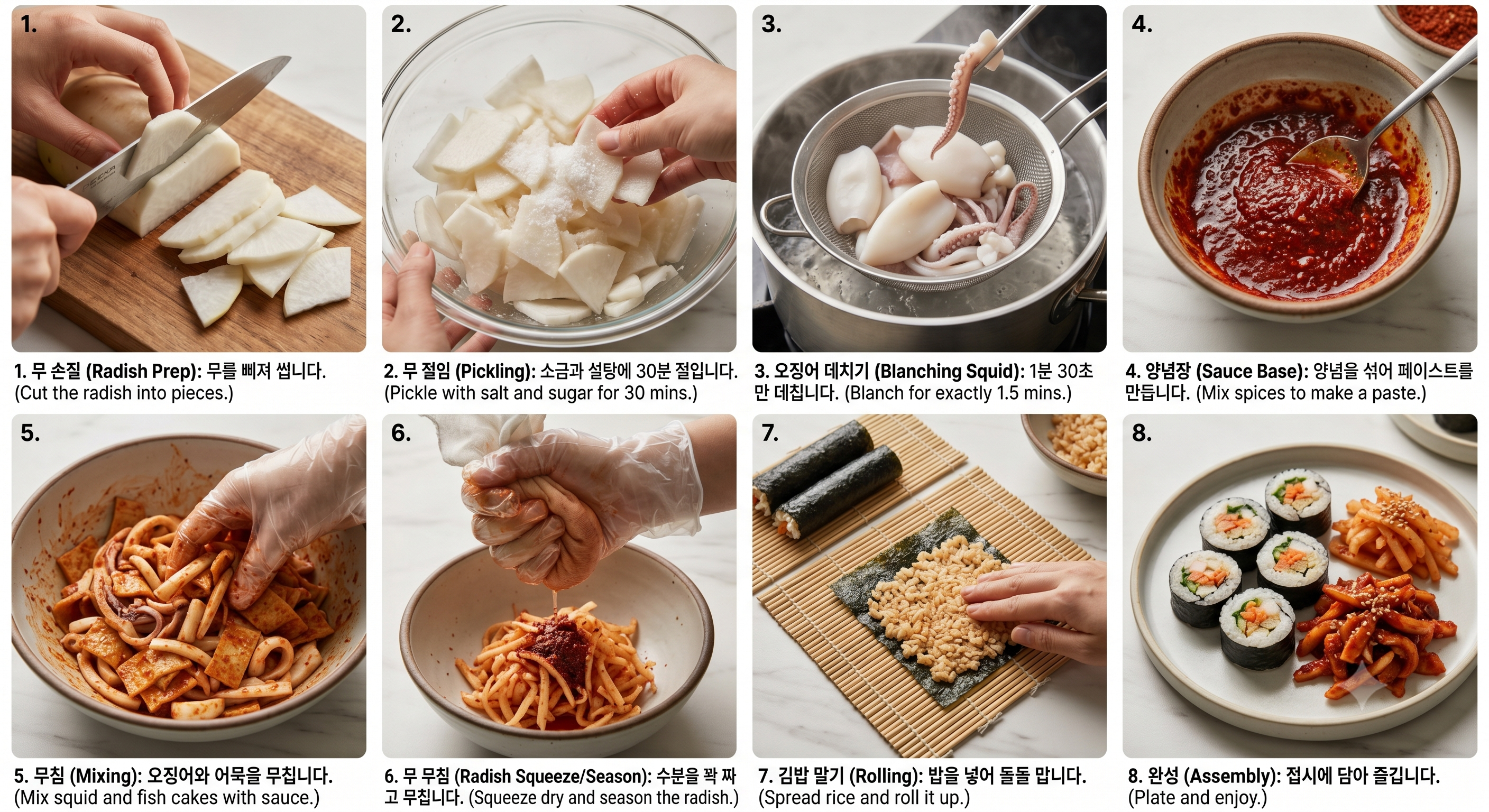
① 아삭한 섞박지 무김치 만들기 (Making Crunchy Radish Kimchi)
충무김밥을 만들 때 가장 먼저 시작해야 하는 과정입니다. 무를 미리 절여두어야 전체 조리 시간을 단축할 수 있습니다. This is the very first step you should take when making Chungmu Gimbap. Pickling the radish in advance helps shorten the overall cooking time.
- 한국 무(또는 다이콘 무)는 깨끗이 씻어 껍질을 연필 깎듯 삐져내거나, 한입 크기(두께 0.5cm)가 되도록 투박하고 어슷하게 썰어 줍니다. Rinse the Korean radish (or Daikon) thoroughly. Slice it into bite-sized, irregular flat pieces roughly 0.5cm thick, as if shaving a pencil.
- 넓은 볼에 무를 담고 굵은 소금 1큰술과 설탕 1큰술을 골고루 뿌려 가볍게 버무린 뒤 30분간 절여둡니다. In a large bowl, combine the radish with 1 tbsp of coarse salt and 1 tbsp of sugar. Toss gently and let it sit for 30 minutes to draw out moisture.
- 절여진 무는 절대로 물에 헹구지 말고, 그대로 고운 체에 받쳐 흘러나온 수분만 손으로 꽉 짜서 제거합니다. Do not rinse the pickled radish with water under any circumstances. Simply drain it through a fine strainer and squeeze out as much excess liquid as possible with your hands.
- 물기를 뺀 무에 고춧가루 2큰술, 멸치액젓 1큰술, 다진 마늘 0.5큰술, 다진 생강을 넣고 양념의 붉은 색이 무에 잘 배어들도록 힘을 주어 팍팍 버무려 완성합니다. Season the drained radish with 2 tbsp of Gochugaru, 1 tbsp of fish sauce, 0.5 tbsp of minced garlic, and a pinch of minced ginger. Mix thoroughly using your hands with some pressure until each piece turns vibrantly red.
② 매콤달콤 오징어 어묵 무침 만들기 (Spicy Squid & Fish Cake Salad)
충무김밥의 화려한 맛을 담당하는 하이라이트 반찬입니다. 매콤하면서도 달짝지근한 양념이 훌륭한 감칠맛을 선사합니다. This is the highlight side dish responsible for the rich flavor of Chungmu Gimbap. The spicy yet sweet seasoning delivers an incredible umami profile.
- 오징어는 내장과 뼈를 깔끔하게 제거한 뒤, 끓는 물에 딱 1분 30초에서 2분 사이로 빠르게 데쳐냅니다. Clean the squid thoroughly, removing the entrails and cartilage. Blanch it in boiling water for exactly 1.5 to 2 minutes.
- 데친 오징어는 곧바로 찬물에 헹궈 탱글함을 살리고 한입 크기로 보기 좋게 썰어줍니다. Immediately rinse the blanched squid in cold water to preserve its chewy texture, then slice it into pleasant bite-sized pieces.
- 사각 어묵 역시 끓는 물에 가볍게 데쳐서 표면의 기름기를 빼주고, 오징어와 비슷한 모양(삼각형 또는 사각형)으로 썰어줍니다. Quickly flash-blanch the flat fish cakes in boiling water to remove excess surface oil, then cut them into triangles or squares matching the size of your squid.
- 넓은 볼에 고춧가루 3큰술, 간장 1.5큰술, 멸치액젓 1큰술, 올리고당 2큰술, 다진 마늘 1큰술을 넣고 잘 섞어 진득한 양념 베이스를 만듭니다. In a large mixing bowl, combine 3 tbsp of Gochugaru, 1.5 tbsp of soy sauce, 1 tbsp of fish sauce, 2 tbsp of corn syrup (or honey), and 1 tbsp of minced garlic to create a thick seasoning paste.
- 양념장에 손질된 오징어와 어묵을 넣고, 양념이 재료 속까지 잘 스며들도록 손에 힘을 주어 조물조물 무쳐주고 마지막에 통깨를 뿌립니다. Toss the prepared squid and fish cakes into the paste. Mix with your hands while applying pressure so the rich flavors coat perfectly, then finish with a sprinkle of toasted sesame seeds.
③ 고소한 꼬마김밥 말기 (Rolling Mini Gimbap)
화려한 반찬들과 앙상블을 이룰 수 있도록 고소하게 밑간을 한 미니 김밥을 말아줄 차례입니다. Now it is time to roll the mini gimbap, lightly and savory-seasoned to create a perfect ensemble with the flavorful side dishes.
- 갓 지어 고슬고슬하고 따뜻한 흰밥에 참기름 1큰술과 소금 1/2작은술을 고르게 넣고, 주걱을 세워 밥알이 으깨지지 않도록 살살 섞어 한 김 식혀줍니다. Season freshly cooked, warm short-grain rice with 1 tbsp of sesame oil and 0.5 tsp of salt. Use a cutting motion with a spatula to mix gently without mashing the rice grains, and let it cool slightly.
- 일반 김밥용 구운 김을 십자 모양으로 대칭되게 잘라 총 4등분의 작은 정사각형 조각으로 만듭니다. Take a full sheet of roasted seaweed (Nori) and cut it crosswise into 4 equal, smaller square pieces.
- 자른 김의 거친 면이 위를 향하게 바닥에 놓은 뒤, 양념한 밥을 수저로 크게 한 큰술 정도 덜어 김 위에 얇고 고르게 폅니다. Lay a mini seaweed square down with the rough side facing upward. Spread a thin, even tablespoon-sized layer of the seasoned rice across the sheet.
- 아랫부분부터 힘을 주어 돌돌 말아주면 한입에 쏙 들어가는 미니 김밥이 완성되며, 내기 직전 겉면에 참기름을 살짝 바릅니다. Roll it up tightly from the bottom to form a clean miniature roll. Lightly brush the exterior with a touch of sesame oil just before serving for an appetizing sheen.
3. 실패 방지 및 문제 해결 팁 (Troubleshooting Guide)
💡 Q1. 오징어가 타이어처럼 너무 질겨졌어요! 어떻게 해결하나요? What if the squid becomes too tough and rubbery like a tire?
- 원인 (Cause): 오징어는 열을 오래 받으면 단백질이 급격히 굳어 단단하고 질겨집니다. Squid proteins coagulate and harden quickly when exposed to heat for too long.
- 해결책 (Solution): 끓는 물에 넣은 뒤 겉면이 불투명한 흰색으로 변하는 시점(약 1분 30초 내외)에 즉시 건지셔야 합니다. 만약 이미 질겨졌다면 결 반대로 얇게 채 썰어 양념 무침을 하거나, 다음 조리 시 건져내자마자 얼음물에 마사지하듯 헹궈 열기를 차단해 보세요. You must remove it immediately from the boiling water when the surface turns opaque white (around 1.5 minutes). If it's already tough, slice it very thinly against the grain, or next time, plunge it into ice water right after blanching to stop the cooking process.
💡 Q2. 무에서 물이 계속 나와 양념이 한강이 되었어요. The radish keeps leaking water, making the seasoning too watery.
- 원인 (Cause): 무를 충분히 절이지 않았거나, 절인 후 내부 수분을 제대로 짜내지 않은 탓입니다. This happens because the radish wasn't pickled long enough or the inner moisture wasn't squeezed out properly after pickling.
- 해결책 (Solution): 응급 처치가 필요하다면 그릇 바닥에 고인 수분을 약간 따라낸 뒤, 고춧가루 1큰술을 추가로 투입하여 수분을 흡수시켜 줍니다. 다음 조리 시에는 무를 절인 뒤 면포에 싸서 비틀어 짤 정도로 수분을 완벽하게 '꽉' 제거해 주는 것이 무침 맛을 살리는 핵심입니다. For an emergency fix, drain some of the accumulated water and mix in an extra tablespoon of Gochugaru to absorb the moisture. Next time, ensure you squeeze the pickled radish completely dry using a cheesecloth before seasoning.
💡 Q3. 김밥을 말았는데 자꾸 옆구리가 풀리고 눅눅해져요. The mini gimbap rolls keep unrolling and getting soggy.
- 원인 (Cause): 뜨거운 김이 나는 밥을 김 위에 바로 올려 김이 습기를 과하게 머금었기 때문입니다. This is caused by placing steaming hot rice directly onto the seaweed, which makes it absorb too much moisture too quickly.
- 해결책 (Solution): 밥을 지은 뒤 반드시 미지근한 상태로 한 김 식혀서 말아주세요. 또한, 김밥을 다 감싸고 난 뒤 마감(이음새) 부분이 도마나 접시의 바닥면을 향하도록 놓아두면, 밥의 온기와 수분 덕분에 자연스럽게 착 달라붙어 고정됩니다. Always let the seasoned rice cool down to a lukewarm temperature before rolling. Also, place the rolled gimbap with the seam side facing down on the plate; the residual warmth and moisture will naturally seal it tight.
https://andamiro1004.tistory.com/43
[K-Food] 시원함의 끝판왕! 아삭한 식감이 살아있는 맑은 콩나물국 황금레시피 (Clear and Refreshing Soyb
과음한 다음 날 속을 부드럽게 풀어줄 해장국이 간절할 때, 혹은 유난히 기름진 음식을 먹어 입안을 깔끔하게 정돈하고 싶을 때 여러분은 어떤 음식을 찾으시나요? 한국인이라면 누구나 가슴속
andamiro1004.tistory.com


