비가 오거나 쌀쌀한 날이면 어김없이 생각나는 대한민국 대표 소울푸드, 바로 칼국수입니다. 쫄깃한 면발과 시원하면서도 깊은 감칠맛을 내는 국물의 조화는 언제 먹어도 질리지 않는 매력이 있습니다. 하지만 막상 집에서 칼국수를 끓이려고 하면 면이 툭툭 끊어지거나, 국물이 지나치게 텁텁해져 실망하셨던 경험이 한 번쯤은 있으실 겁니다.
On a rainy or chilly day, one dish that naturally comes to mind is Kalguksu (Korean hand-cut noodles), a representative soul food of Korea. The harmony of chewy noodles and a refreshing yet deep, savory broth is a charm that never gets tiring. However, when trying to cook Kalguksu at home, you might have experienced disappointment because the noodles broke easily or the broth became overly thick and murky.
오늘 소개해 드리는 레시피는 시판 칼국수 면을 활용하면서도, 전문점 못지않게 깔끔하고 진한 국물 맛을 내는 칼국수 황금 레시피입니다. 요리 초보자분들도 실패 없이 완벽한 맛을 낼 수 있도록 육수 내는 법부터 면발을 탱글하게 살리는 팁까지 한국어와 영어 설명으로 상세히 정리해 드립니다.
The recipe introduced today uses commercially available ready-made Kalguksu noodles, but delivers a clean and rich broth that rivals professional restaurants. To help beginners succeed without fail, we have detailed everything from making the broth to tips for keeping the noodles chewy, complete with both Korean and English explanations.
1. 칼국수 필수 재료 및 분량 (Ingredients and Measurements)
칼국수의 핵심은 국물의 깊은 맛을 내는 육수 재료와 면의 전분기를 잡아줄 부재료의 조화입니다. 아래 표를 참고하여 재료를 준비해 주세요. (2인분 기준)
The key to Kalguksu is the harmony between the broth ingredients that create a deep flavor and the sub-ingredients that balance the starch from the noodles. Please prepare the ingredients based on the table below. (Serves 2)
| 주재료 (Main) | 시판 칼국수 면 (Kalguksu Noodles) | 2인분 (300g) | 생면 기준 (Raw noodles) |
| 육수 (Broth) | 국물용 멸치 (Dried Anchovies) | 15마리 (15 pcs) | 내장 제거 필수 (Guts removed) |
| 다시마 (Dried Kelp) | 2장 (2 pieces) | 사방 5cm 크기 (5x5cm) | |
| 디포리 (Dried Large Anchovies) | 3마리 (3 pcs) | 깊은 맛 추가 (For richer flavor) | |
| 물 (Water) | 1.5L | 쌀뜨물 대체 가능 (Rice water usable) | |
| 야채 (Vegetables) | 애호박 (Green Zucchini) | 1/3개 (1/3 pc) | 채썰기 (Julienned) |
| 감자 (Potato) | 1개 (1 pc) | 반달썰기 (Half-moon sliced) | |
| 당근 (Carrot) | 1/4개 (1/4 pc) | 색감용 채썰기 (Julienned for color) | |
| 대파 (Green Onion) | 1/2대 (1/2 pc) | 어슷썰기 (Diagonally sliced) | |
| 표고버섯 (Shiitake Mushroom) | 1개 (1 pc) | 편썰기 (Sliced) | |
| 양념 (Seasoning) | 국간장 (Soup Soy Sauce) | 1.5큰술 (1.5 tbsp) | 국물 색 및 간 조절 (For color & salt) |
| 멸치액젓 (Anchovy Fish Sauce) | 1큰술 (1 tbsp) | 감칠맛 향상 (For umami flavor) | |
| 다진 마늘 (Minced Garlic) | 1큰술 (1 tbsp) | 잡내 제거 (Removes odor) | |
| 후추 (Black Pepper) | 약간 (A pinch) | 마무리용 (For finishing touch) |
2. 식재료 준비 및 손질법 (Ingredient Preparation & Handling)
주요 재료 손질법 (Main Ingredient Handling)
- 국물용 멸치 (Dried Anchovies): 멸치는 반드시 대가리를 떼지 않더라도 몸통을 갈라 '내장(똥)'을 완벽히 제거해야 합니다. 내장을 넣고 끓이면 국물에서 쓴맛과 텁텁한 맛이 나기 때문입니다.
- You must split the body of the dried anchovies and completely remove the black innards (guts). Leaving the innards in will cause the broth to taste bitter and murky.
- 야채 썰기 (Cutting Vegetables): 감자는 너무 얇게 썰면 끓이는 과정에서 부서져 국물이 탁해지므로 0.5cm 두께의 반달썰기를 권장합니다. 애호박과 당근은 일정한 굵기로 일정하게 채 썰어 준비합니다.
- If potatoes are sliced too thin, they will break down during boiling and make the broth cloudy. Therefore, half-moon slices with a thickness of 0.5 cm are recommended. Zucchini and carrots should be julienned into uniform thicknesses.
주재료별 대체 가능한 식재료 안내 (Substitutable Ingredients)
- 시판 생면이 없을 때 (When raw noodles are unavailable): 일반 소면이나 중면을 사용할 수 있으나, 칼국수 특유의 두툼한 식감을 원하신다면 수제비 반죽을 얇게 떼어 넣거나 우동 면으로 대체하셔도 좋습니다.
- You can use regular thin wheat noodles (Somen), but if you want the uniquely thick texture of Kalguksu, you can substitute it with thinly torn Sujebi (hand-pulled dough) or Udon noodles.
- 야채 대체 (Vegetable Substitutes): 표고버섯 대신 느타리버섯이나 새송이버섯을 찢어 넣어도 훌륭한 식감을 냅니다. 칼칼한 맛을 선호하신다면 마지막 단계에 청양고추 1개를 송송 썰어 넣어주세요.
- Instead of shiitake mushrooms, tearing oyster mushrooms or king oyster mushrooms will also provide an excellent texture. If you prefer a spicy kick, finely slice and add one Cheongyang chili pepper at the final stage.
3. 단계별 조리 과정 (Step-by-Step Cooking Guide)
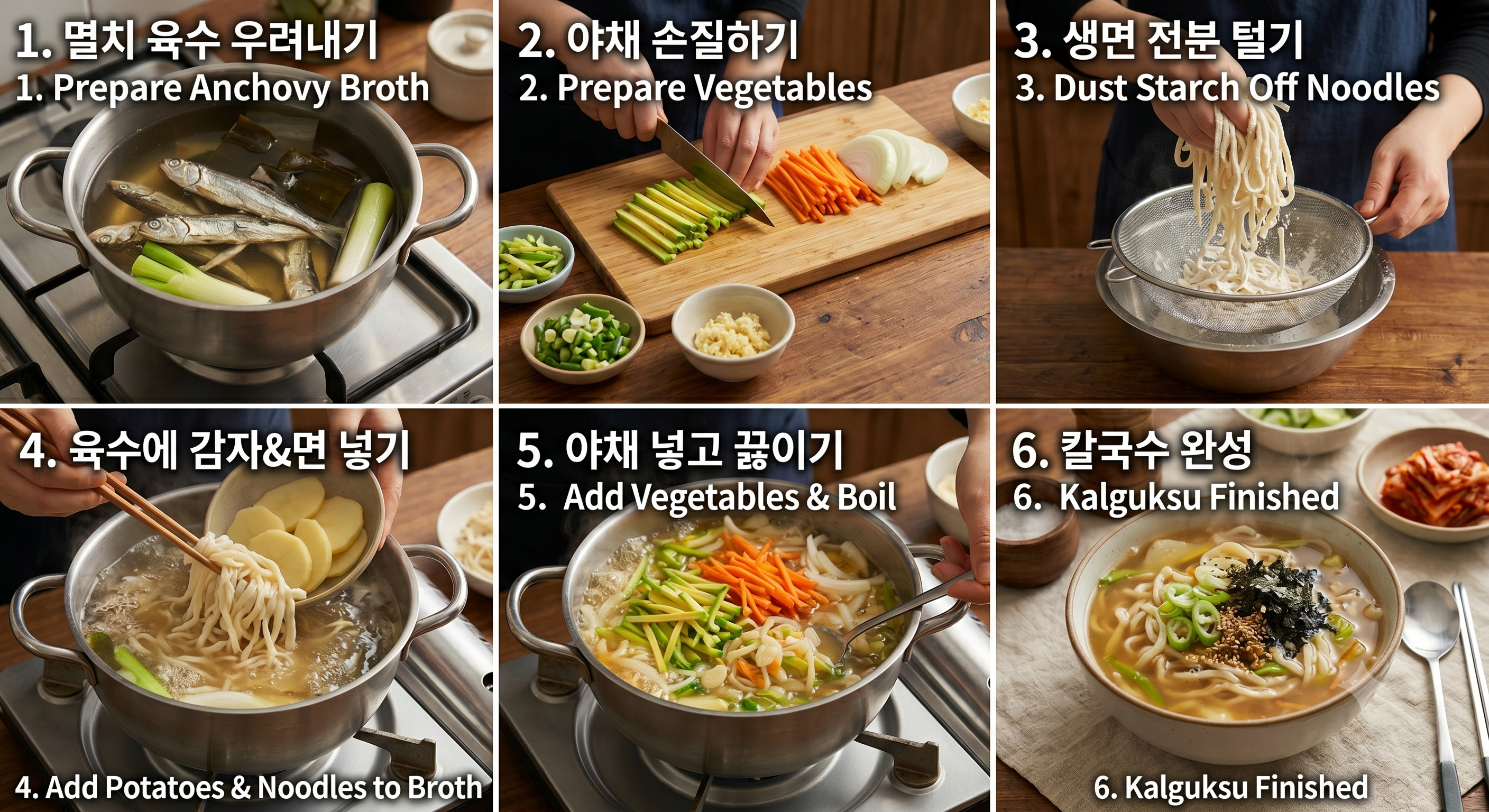
단계 1: 깊고 진한 멸치 다시마 육수 끓이기 (Making the Broth)
냄비에 마른 멸치와 디포리를 넣고 기름 없이 중불에서 1~2분간 달달 볶아 비린내를 날려줍니다. 고소한 향이 올라오면 물 1.5L와 다시마를 넣고 센 불로 끓입니다. 물이 끓기 시작하면 다시마는 끈적한 진액이 나오므로 먼저 건져내고, 약불로 줄여 15분간 더 끓인 후 멸치를 건져내 맑은 육수를 완성합니다.
- Put dried anchovies and large anchovies in a pot and toast them over medium heat for 1–2 minutes without oil to eliminate the fishy smell. When a savory aroma rises, pour in 1.5L of water and add the dried kelp, then bring to a boil over high heat. Once the water starts boiling, remove the kelp first to prevent a slimy texture, reduce the heat to low, simmer for an additional 15 minutes, and then strain out the anchovies to complete a clear broth.
단계 2: 단단한 야채 먼저 넣고 끓이기 (Cooking Hard Vegetables First)
완성된 맑은 육수를 다시 불에 올리고, 딱딱해서 익는 데 시간이 오래 걸리는 감자와 표고버섯을 먼저 넣고 중불에서 끓여줍니다. 감자가 반쯤 투명하게 익을 때까지 약 3~4분간 먼저 조리합니다.
- Bring the completed clear broth back to a boil. Add the potatoes and shiitake mushrooms first, as they are hard and take longer to cook, and boil over medium heat. Cook them for about 3–4 minutes until the potatoes become semi-translucent.
단계 3: 국물 기본 양념 및 간 맞추기 (Seasoning the Broth)
육수가 끓어오르면 다진 마늘 1큰술, 국간장 1.5큰술, 멸치액젓 1큰술을 넣어 기본 간을 맞춥니다. 이때 국물 표면에 올라오는 하얀 거품은 숟가락으로 수시로 걷어내 주어야 깔끔하고 담백한 국물을 유지할 수 있습니다.
- When the broth comes to a boil, add 1 tablespoon of minced garlic, 1.5 tablespoons of soup soy sauce, and 1 tablespoon of anchovy fish sauce to season it. At this time, you should frequently skim off the white foam rising to the surface with a spoon to maintain a clean and light broth.
단계 4: 칼국수 면 전분기 제거 및 투하 (Preparing and Adding Noodles)
시판 칼국수 생면에 묻어 있는 하얀 밀가루(전분가루)를 반드시 털어내야 합니다. 가볍게 털어내거나 찬물에 빠르게 한 번 헹궈낸 뒤, 끓는 육수에 면을 넓게 펼치며 넣어줍니다. 면을 넣은 직후에는 면발이 서로 뭉치거나 바닥에 붙지 않도록 젓가락으로 살살 풀어줍니다.
- You must shake off the excess white flour (starch powder) coated on the commercial raw Kalguksu noodles. After lightly shaking it off or rinsing it quickly once in cold water, spread the noodles widely into the boiling broth. Immediately after adding the noodles, gently loosen them with chopsticks so that they do not clump together or stick to the bottom.
단계 5: 야채 추가 및 조리 마무리 (Adding Remaining Vegetables & Finishing)
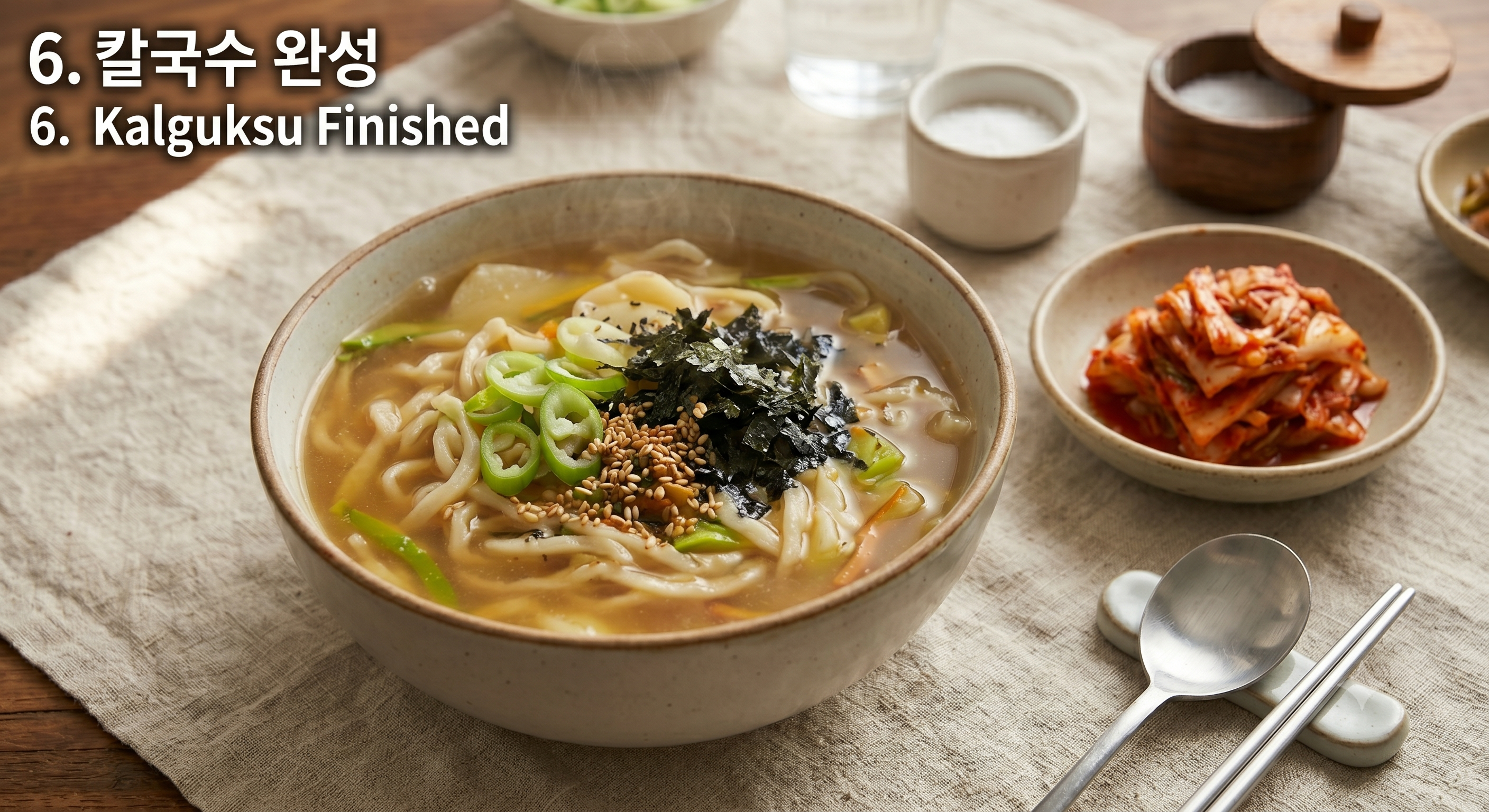
면을 넣고 국물이 다시 끓어오르면 채 썬 애호박, 당근, 어슷 썬 대파를 모두 넣고 면이 완전히 익을 때까지 약 5분간 더 끓여줍니다. 면발을 하나 건져보아 심지 없이 투명하게 익었으면 불을 끄고 후춧가루를 톡톡 뿌려 마무리합니다.
- Once the broth returns to a boil after adding the noodles, add all the julienned zucchini, carrots, and diagonally sliced green onions. Boil for about 5 more minutes until the noodles are fully cooked. Take out a strand of noodle to check if it is translucently cooked through without any hard core, then turn off the heat and finish with a shake of black pepper.
4. 칼국수 맛을 2배 올리는 전문가 팁 (Pro Tips)
- 전분기 조절로 국물 농도 맞추기 (Controlling Broth Thickness): 깔끔하고 맑은 포장마차 스타일의 국물을 원하신다면 면을 찬물에 살짝 헹구어 전분기를 완전히 제거한 후 넣으세요. 반대로 걸쭉하고 묵직한 시장 스타일을 원하신다면 겉면의 가루만 가볍게 털어내고 육수에 바로 넣으시면 됩니다.
- If you want a clean and clear street-stall style broth, rinse the noodles slightly in cold water to completely remove the starch before adding them. Conversely, if you prefer a thick and heavy market-style broth, just lightly shake off the surface flour and put them straight into the broth.
- 면발의 탱글함을 살리는 방법 (How to Keep Noodles Chewy): 면을 끓이는 동안 공기 중에 면발을 젓가락으로 몇 번 들어 올렸다 놓았다 해주면, 순간적인 온도 차이로 인해 면발의 탄력이 극대화되어 훨씬 쫄깃한 식감을 즐길 수 있습니다.
- While boiling the noodles, lift them up into the air with chopsticks a few times and let them drop. The instantaneous temperature difference maximizes the elasticity of the noodles, allowing you to enjoy a much chewier texture.
- 부족한 간 채우기 (Adjusting the Final Saltiness): 최종 간을 보았을 때 싱겁다면 국간장을 더 넣지 마시고 소금으로 채우세요. 간장을 너무 많이 넣으면 국물 색이 검게 변해 미관상 좋지 않습니다.
- If it tastes bland upon the final tasting, do not add more soup soy sauce; adjust the seasoning with salt instead. Adding too much soy sauce will turn the broth dark, which does not look appetizing.
https://andamiro1004.tistory.com/80
기숙사 전자레인지 라면 계란찜 황금 레시피(Dorm Room Microwave Ramen Steamed Egg Recipe)
기숙사나 자취방 생활을 하다 보면 늦은 밤 출출할 때나 마땅한 반찬이 없을 때, 불 없이 간단하게 한 끼를 해결하고 싶은 순간이 많습니다 . 특히 냄비나 가스레인지, 인덕션 같은 조리 기구가
andamiro1004.tistory.com


