1. 가슴 속까지 뻥 뚫리는 시원한 동치미 소개와 저의 이야기 Introduction of Refreshing Dongchimi and My Story
안녕하세요! 오늘은 겨울철 밥상에 절대 빠질 수 없는 최고의 밥도둑, 바로 시원한 동치미 레시피를 준비했습니다. Hello everyone! Today, I have prepared the ultimate refreshing Dongchimi recipe, an absolute must-have for the winter dining table.
어릴 적 시골 할머니 댁 뒷마당 장독대에서 살얼음이 살짝 낀 동치미 국물을 한 국자 떠서 고구마와 함께 먹던 그 맛을 아직도 잊지 못합니다. I still cannot forget the taste of eating Dongchimi with sweet potatoes, scooping up the slightly iced broth from the earthen pot in my grandmother's backyard when I was young.
기름진 음식을 먹었을 때나 소화가 잘 안 될 때, 이 톡 쏘는 동치미 국물 한 모금이면 가슴 속까지 시원하게 뻥 뚫리는 기분을 느끼실 수 있습니다. When you eat greasy food or feel indigestion, just a sip of this carbonated Dongchimi broth will make you feel completely refreshed inside.
2. 무가 물러지거나 국물이 뿌옇게 변하는 실패의 원인 Causes of Failure Where Radish Becomes Soft or Broth Turns Cloudy
하지만 의외로 많은 분들이 동치미 만들기에 도전했다가 시간이 지나면서 무가 흐물흐물하게 물러지거나, 국물이 탁하고 끈적하게 변해 실패하곤 합니다. However, surprisingly, many people attempt to make Dongchimi but fail because the radish becomes mushy and soft over time, or the broth turns cloudy and sticky.
저 역시 처음에는 무를 대충 절이고 물만 부으면 되는 줄 알았는데, 얼마 지나지 않아 국물에서 군내가 나고 무의 아삭함이 완전히 사라져 버린 적이 있습니다. In the beginning, I also thought it was enough to just lightly pickle the radish and pour water, but before long, the broth smelled stale and the crunchiness of the radish completely disappeared.
이러한 실패는 대부분 무를 절이는 소금의 비율이 맞지 않았거나, 국물에 들어가는 풀국의 온도, 그리고 부재료의 수분 조절을 잘못했기 때문에 발생합니다. Most of these failures occur because the salt ratio for pickling the radish was incorrect, the temperature of the starch porridge added to the broth was wrong, or the moisture of the sub-ingredients was poorly controlled.
3. 아삭함과 톡 쏘는 청량감을 오래 유지하는 해결책 Solutions to Keep the Crunchiness and Carbonated Refreshment for a Long Time
동치미의 아삭함과 사이다처럼 톡 쏘는 청량감을 끝까지 유지하는 결정적인 해결책은 바로 '단단한 무 선택'과 '소금 굴리기 절임법'에 있습니다. The ultimate solution to maintaining the crunchiness and cider-like carbonated refreshment of Dongchimi until the very end lies in 'choosing firm radishes' and 'salt-rolling pickling.'
무를 칼로 썰어서 절이면 단맛과 수분이 다 빠져나가 물러지기 쉬우므로, 작은 통무 겉면에 천일염을 듬뿍 묻혀 단단하게 짜내듯 절여야 무 속까지 간이 배고 아삭함이 오래갑니다. If you slice the radish before pickling, the sweetness and moisture drain out, making it easy to soften; therefore, you must roll small whole radishes in plenty of coarse sea salt to pickle them firmly so the seasoning penetrates inside and the crunchiness lasts.
또한 풀국을 완전히 식혀서 넣고, 배와 양파 등의 부재료는 베이징이나 면포에 넣어 국물이 지저분해지는 것을 막아주는 것이 깔끔하고 톡 쏘는 국물의 비밀입니다. Also, completely cooling down the starch porridge before adding it, and putting sub-ingredients like pears and onions into a cotton pouch to prevent the broth from getting messy, is the secret to a clean and tangy broth.
4. 실패 없는 동치미를 위한 재료 준비 Preparation of Ingredients for Dongchimi Without Failure
언제나 성공하는 동치미를 위해 필요한 재료들을 표로 일목요연하게 정리해 드립니다. Here is a clear table of the ingredients needed for a consistently successful Dongchimi.
| 주재료 (Main) | 동치미용 작은 무 | Small Radish (Dongchimi mu) | 5개 (5 Pieces) |
| 절임용 (Pickling) | 천일염 (굵은 소금) | Coarse Sea Salt | 1컵 (1 Cup) |
| 부재료 (Sub) | 배 | Pear | 1개 (1 Piece) |
| 부재료 (Sub) | 양파 | Onion | 1개 (1 Piece) |
| 부재료 (Sub) | 쪽파 | Scallions | 10대 (10 Stalks) |
| 부재료 (Sub) | 삭힌 고추 | Fermented Green Chilies | 5~6개 (5~6 Pieces) |
| 부재료 (Sub) | 마늘 | Garlic | 10쪽 (10 Cloves) |
| 부재료 (Sub) | 생강 | Ginger | 1쪽 (1 Piece) |
| 국물 (Broth) | 생수 (또는 끓여 식힌 물) | Mineral Water | 4리터 (4L) |
| 국물 양념 (Seasoning) | 신화당 (또는 뉴수가) | Saccharin (New Sugar) | 0.5작은술 (0.5 Teaspoon) |
| 풀국 (Porridge) | 찹쌀가루 1큰술 + 물 1컵 | Glutinous Rice Flour 1T + Water 1C | 1컵 (1 Cup) |
5. 무 아삭함을 극복하는 손질과 소금 절이기 Trimming and Salt Pickling to Master Radish Crunchiness
동치미용 작은 무는 깨끗한 수세미로 겉면의 흙을 살살 닦아내며 흐르는 물에 씻어줍니다. 칼로 껍질을 벗기면 무가 금방 물러지므로 껍질째 사용하는 것이 핵심입니다. Wash the small Dongchimi radishes under running water, gently wiping the dirt off the surface with a clean scrubber. Avoid peeling with a knife because the skin keeps the radish from softening quickly.
물기가 약간 남아있는 무를 천일염 1컵을 펼쳐놓은 쟁반에 올려 겉면에 소금이 하얗게 묻도록 데굴데굴 굴려줍니다. Roll the slightly damp radishes on a tray spread with 1 cup of coarse sea salt so that the surface is thickly coated with salt.
이 상태로 김치통에 차곡차곡 담아 하루(약 24시간) 동안 그대로 절여둡니다. 다음 날 보면 무에서 수분이 빠져나와 바닥에 소금물이 고이고 무가 살짝 말랑해진 것을 확인할 수 있습니다. 이때 나온 소금물은 버리지 말고 국물 간을 맞출 때 사용합니다. Stack them in a kimchi container and let them pickle for a full day (about 24 hours). The next day, you will see water extracted from the radishes creating brine at the bottom, and the radishes will become slightly pliable. Do not discard this brine; use it later to season the broth.
6. 깔끔한 국물을 위한 부재료 손질과 풀국 만들기 Trimming Sub-ingredients and Making Starch Porridge for Clean Broth
무가 절여지는 동안 국물을 맑게 유지해 줄 부재료를 준비합니다. 배와 양파는 깨끗이 씻어 껍질째 4등분 한 뒤 씨를 제거합니다. 마늘과 생강은 얇게 편 썰어 다시백이나 면포에 넣어줍니다. 이렇게 해야 국물이 지저분해지지 않고 깔끔합니다. While the radish is pickling, prepare the sub-ingredients to keep the broth clear. Wash the pear and onion thoroughly, cut them into quarters with the skin on, and remove the seeds. Slice the garlic and ginger thinly and place them into a mesh pouch. This keeps the broth clean and free of floating debris.
쪽파는 한 줌씩 묶어서 타래를 틀어주고, 삭힌 고추는 흐르는 물에 가볍게 씻어 물기를 빼둡니다. 삭힌 고추가 들어가야 동치미 특유의 칼칼하고 톡 쏘는 맛이 살아납니다. Tie the scallions into small, neat bundles, and lightly rinse the fermented green chilies, draining the water. The fermented chilies are essential for creating Dongchimi's characteristic crisp and tangy bite.
냄비에 물 1컵과 찹쌀가루 1큰술을 잘 풀어준 뒤, 약불에서 저어가며 묽은 풀국을 끓여줍니다. 완성된 풀국은 반드시 차갑게 완전히 식혀서 준비해야 동치미 국물이 걸쭉해지거나 상하는 것을 막을 수 있습니다. In a small pot, mix 1 cup of water and 1 tablespoon of glutinous rice flour well, then simmer over low heat while stirring to make a thin porridge. The finished porridge must be cooled down completely to prevent the broth from becoming thick or spoiling.
7. 황금 비율 동치미 국물 붓기와 숙성 타이밍 Pouring Golden Ratio Dongchimi Broth and Aging Timing
하루 동안 잘 절여진 무가 담긴 김치통에 준비한 배, 양파, 쪽파, 삭힌 고추, 그리고 마늘과 생강이 든 다시백을 무 사이사이에 잘 꽂아 넣습니다. Between the radishes that have been pickled for a day, tuck in the prepared pear, onion, scallions, fermented chilies, and the mesh pouch containing the garlic and ginger.
여기에 생수 4리터와 완전히 식은 찹쌀풀국을 붓고, 무를 절일 때 바닥에 고였던 소금물도 함께 부어줍니다. 설탕을 넣으면 국물이 끈적해지므로, 단맛과 청량감을 위해 신화당(뉴수가) 0.5작은술을 물에 잘 풀어 넣어줍니다. Pour 4 liters of mineral water and the completely cooled starch porridge into the container, along with the salty brine collected at the bottom from pickling the radishes. Adding sugar makes the broth sticky, so dissolve 0.5 teaspoon of saccharin (New Sugar) in the water instead for a clean sweetness and carbonation.
국물의 최종 간은 살짝 짭조름해야 나중에 무에서 단맛이 나왔을 때 간이 딱 맞습니다. 싱겁다면 천일염을 조금 더 추가해 줍니다. The final taste of the broth should be slightly salty at first, so that the seasoning balances perfectly later when the sweetness draws out from the radish. If it feels too bland, add a bit more coarse sea salt.

8. 청량감 넘치는 성공적인 완성과 보관 방법 Successful Completion of Refreshing Taste and Storage Method
모든 재료가 잠기면 뚜껑을 닫고 실온(베란다 등 서늘한 곳)에서 3일에서 5일 정도 숙성시킵니다. Once all ingredients are submerged, close the lid and let it ferment at room temperature (a cool place like a veranda) for about 3 to 5 days.
국물 표면에 작은 기포가 보글보글 올라오고 익은 냄새가 나기 시작하면, 동치미 특유의 천연 탄산이 성공적으로 만들어진 것입니다. 이때 김치냉장고로 옮겨서 아주 차갑게 보관하시면 됩니다. When small bubbles begin to rise to the surface of the broth and a ripe, tangy aroma develops, the characteristic natural carbonation of Dongchimi has successfully formed. Move it to the kimchi refrigerator to keep it ice-cold.
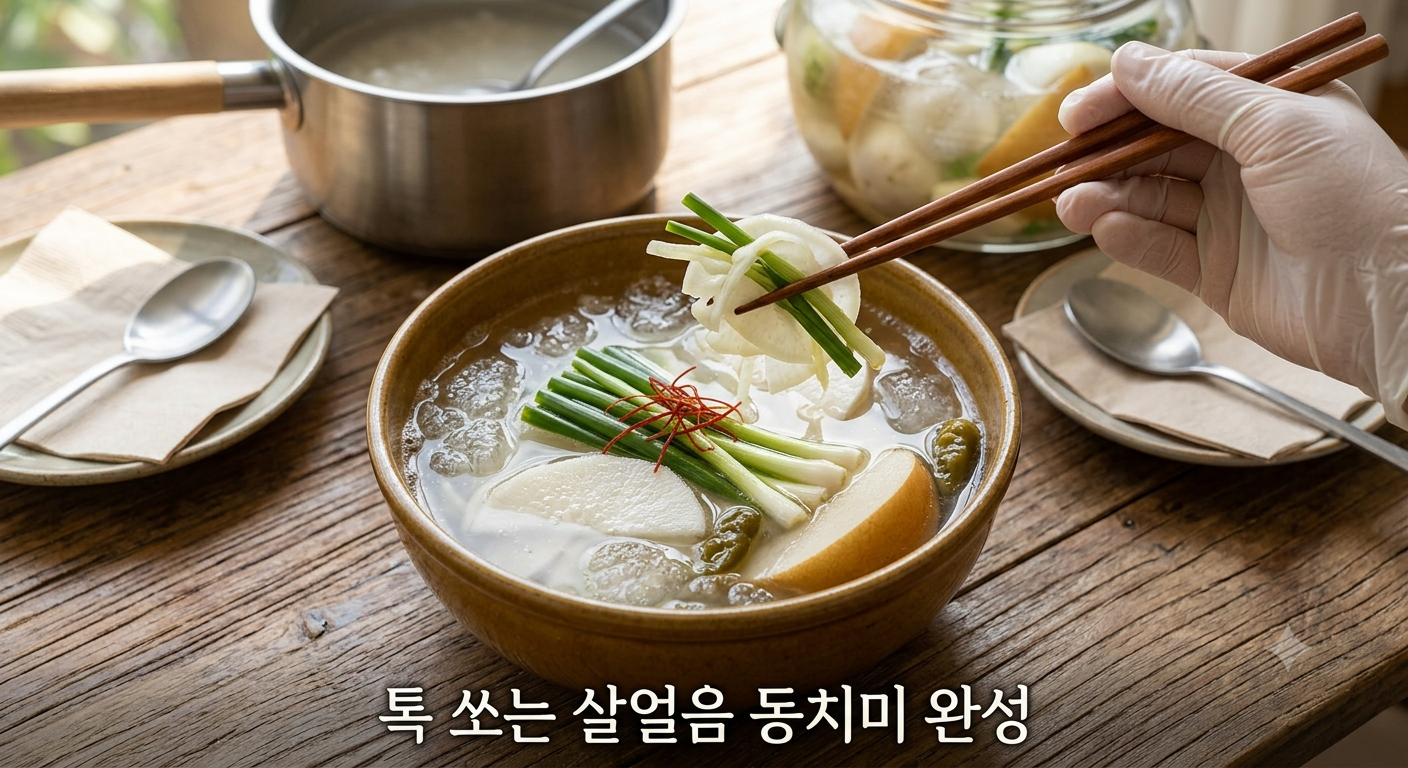
일주일 정도 살얼음이 살짝 얼 정도로 차가워진 동치미를 꺼내어 무를 얇게 썰고 국물을 소복이 담아내면, 사이다보다 더 시원하고 톡 쏘는 겨울철 최고의 별미가 완성됩니다. After about a week, when it is cold enough to form slight ice crystals, take out the radish to slice thinly and scoop plenty of broth; your winter delicacy, cooler and tangier than any soda, is finally complete.
https://andamiro1004.tistory.com/125
아삭함과 깊은 맛의 끝판왕: 콩나물밥 & 콩나물국밥 황금 레시피 The Ultimate Crunchy & Deep Flavor: Bean S
왜 콩나물인가? (The Magic of Bean Sprouts)한국인의 소울푸드를 꼽으라면 단연 콩나물을 빼놓을 수 없습니다. 가격은 저렴하지만, 그 영양과 맛의 가치는 결코 가볍지 않습니다. 특히 비타민 C와 아스
andamiro1004.tistory.com


