새해 첫날, 김이 모락모락 나는 따뜻한 떡국 한 그릇은 한국인에게 단순한 음식을 넘어 ‘한 살 더 먹는다’는 정겨운 의미와 복을 기원하는 소중한 의식입니다. On New Year's Day, a steaming bowl of warm Tteok-guk is more than just a dish to Koreans; it is a precious ritual symbolizing aging a year and wishing for blessings.
뽀얀 사골 육수나 깔끔한 멸치 육수 속에 쫄깃하게 익은 떡을 한 입 베어 물면 온몸이 따뜻해지는 기분을 느끼곤 하죠. 하지만 집에서 만들면 식당에서 먹던 그 깊고 진한 맛이 잘 나지 않아 고민하신 적 많으시죠? Taking a bite of chewy rice cakes in a rich bone broth or clean anchovy broth makes you feel warm all over. However, have you ever struggled because you couldn't replicate the deep, rich flavor you get at restaurants when making it at home?

1. 재료 준비 (Ingredients)
성공적인 요리의 시작은 신선한 재료 선택에서 시작됩니다. 아래 표를 참고하여 미리 준비해 주세요. A successful dish begins with selecting fresh ingredients. Please refer to the table below and prepare them in advance.
| 떡국떡 (Rice cake) | 300g | 주재료 (Main) |
| 소고기 양지 (Beef brisket) | 150g | 육수 및 풍미 (Broth & Flavor) |
| 대파 (Green onion) | 1/2대 | 고명 및 향 (Garnish & Scent) |
| 달걀 (Egg) | 1개 | 고명 (Garnish) |
| 국간장 (Soup soy sauce) | 1큰술 | 간 맞추기 (Seasoning) |
| 다진 마늘 (Minced garlic) | 0.5큰술 | 잡내 제거 (Remove odor) |
| 멸치 다시마 육수 | 800ml | 베이스 (Base) |
| 참기름, 소금 | 약간 | 풍미 및 마무리 (Finish) |
2. 왜 내 떡국은 맛이 없을까?
Why does my Tteok-guk taste bland?
떡국을 처음 도전할 때 가장 흔히 하는 실수는 '떡과 육수를 동시에 넣고 끓이는 것'입니다. 육수가 끓기도 전에 떡을 넣으면 떡이 너무 퍼지고, 국물은 전분 때문에 탁해져 맛이 떨어집니다. The most common mistake beginners make is boiling the rice cakes and broth together at the same time. If you add the cakes before the broth is boiling, they become too soft, and the broth turns cloudy and loses flavor due to the starch.
또한, 국간장을 너무 많이 넣거나 소고기를 제대로 볶지 않아 육즙이 충분히 우러나오지 않는 경우도 많습니다. 저는 처음에 이 두 가지를 모두 놓쳐서 밍밍하고 색깔만 검은 떡국을 만들었던 쓰라린 경험이 있습니다. Also, many people add too much soup soy sauce or fail to sauté the beef properly, which keeps the juices from releasing. I had a painful experience making a bland, dark-colored Tteok-guk because I missed both of these steps early on.
해결책 (The Solution):
- 육수를 먼저 끓여 충분히 맛을 낸 후 떡을 넣으세요. Boil the broth first to develop a deep flavor before adding the rice cakes.
- 소고기를 참기름에 충분히 볶아 육즙을 살린 뒤 육수를 부으세요. Sauté the beef well in sesame oil to preserve the juices before adding the broth.
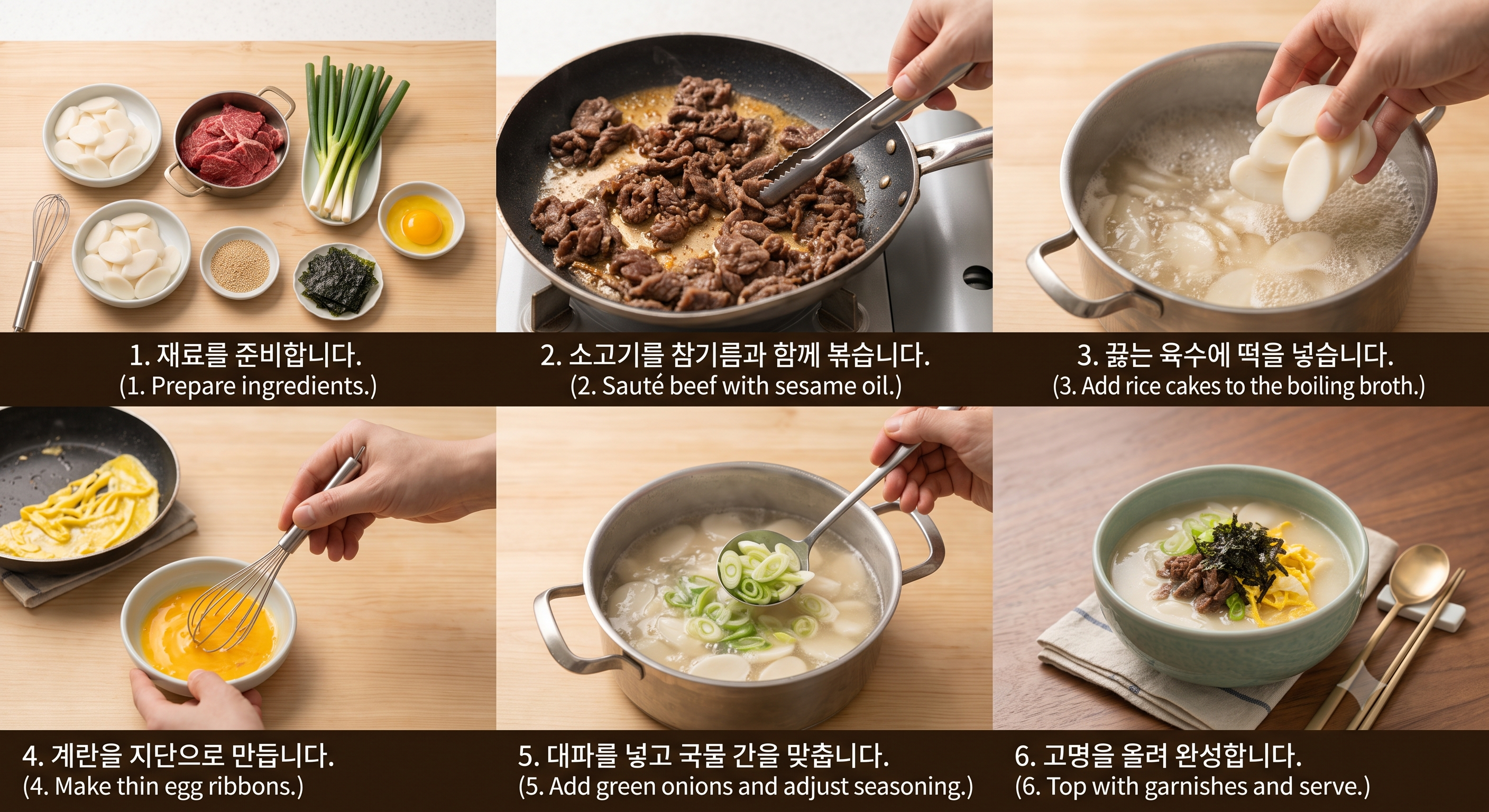
3. 정성을 담은 조리 방법 (Cooking Instructions)
Step 1. 육수 만들기 (Making the Broth) 멸치와 다시마를 찬물에 넣고 10분 정도 충분히 우려냅니다. 너무 오래 끓이면 쓴맛이 나니 주의하세요. Add anchovies and kelp to cold water and simmer for 10 minutes. Be careful not to boil it for too long, as it can turn bitter.
Step 2. 소고기 밑작업 (Sautéing the Beef) 냄비에 참기름을 두르고 소고기를 중불에서 달달 볶습니다. 고기 향이 올라올 때 육수를 붓습니다. Grease a pot with sesame oil and sauté the beef over medium heat. When the aroma rises, pour in the broth.
Step 3. 간 맞추기 (Seasoning) 국물이 끓어오르면 거품을 걷어내고 다진 마늘과 국간장으로 간을 합니다. Once the broth boils, remove the foam and season with minced garlic and soup soy sauce.
Step 4. 떡 넣기 (Adding Rice Cakes) 떡을 넣고 떡이 위로 떠오를 때까지 끓입니다. 퍼지지 않게 주의하세요. Add the rice cakes and cook until they float to the top. Be careful not to let them get too mushy.
Step 5. 고명 올리기 (Garnishing) 어슷 썬 대파와 풀어둔 달걀을 넣어 완성합니다. 김가루를 올리면 더 좋습니다. Finish by adding sliced green onions and beaten eggs. Topping it with shredded dried seaweed is even better.
4. 맛있게 먹는 법과 보관 방법 (Serving and Storage)
맛있게 먹는 법 (How to enjoy it): 푹 익은 김장 김치나 갓 담근 겉절이와 함께 먹으면 궁합이 최고입니다. It pairs perfectly with well-fermented Kimchi or fresh Geotjeori.
보관 방법 (Storage): 남은 떡국은 떡과 국물을 분리하여 보관하는 것이 좋습니다. 재가열 시 물을 아주 조금 더 추가하면 처음의 진한 맛을 그대로 살릴 수 있습니다. It is recommended to store the rice cakes and broth separately if there are leftovers. When reheating, adding a tiny splash of water will help restore the original deep flavor.
외국인 친구도 감탄하는 전통 비빔밥 맛있게 만드는 법 (Authentic Korean Bibimbap Recipe)
본 문서는 한국의 대표적인 전통 요리인 비빔밥의 고소한 풍미를 극대화하는 야채 손질법과 약고추장 소스 제조 공식을 한국어와 영어로 동시에 제공하는 글로벌 정보성 레시피 가이드입니다.
andamiro1004.tistory.com


